The world of UI design is evolving faster than ever with the rise of artificial intelligence. What once relied solely on creativity and intuition now integrates machine learning in UX to understand users more deeply. Through AI algorithms in design, systems can automatically suggest layouts, colors, and components that enhance visual harmony. This combination of creativity and data allows designers to build smarter, more responsive interfaces. By using AI-powered user experience design, brands deliver personalized interactions that adapt to every user’s behavior. As technology advances, the connection between UI designs and artificial intelligence continues to redefine how people engage with digital products and experiences worldwide.
Artificial intelligence has quickly become the creative heartbeat of modern design. In the United States, designers, agencies, and tech companies are witnessing how AI in UI design is reshaping digital experiences. From smarter AI-powered user experience design systems to rapid prototyping powered by machine learning models in creative design, this fusion is redefining how digital products come to life. The growing wave of AI-driven UI/UX development doesn’t just simplify workflows—it enhances design consistency, speeds up ideation, and unlocks never-before-seen personalization across platforms.
Understanding Generative AI and Its Role in UI/UX
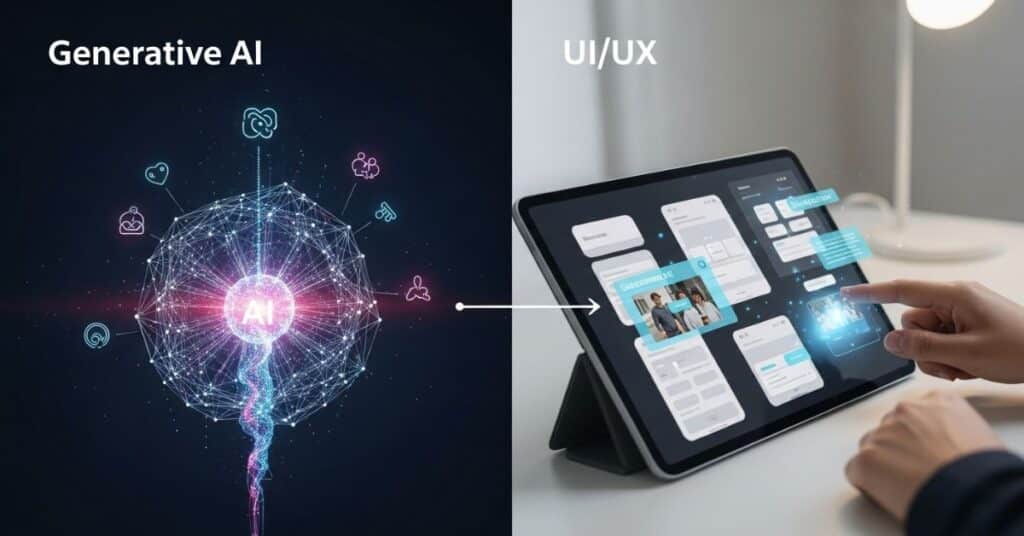
Generative AI is not just another buzzword. It represents a leap in how machines think, learn, and create. Unlike rule-based systems, generative design systems use neural networks in UI creation to understand visual hierarchy, spacing, and color theory. This allows them to generate UI elements automatically, producing multiple variations in seconds that match user intent and project goals.
While AI design process automation increases productivity, its most profound impact lies in data-driven personalization. Every UI it generates draws insights from real-world data patterns, ensuring designs align with user expectations. For American designers, this means they can predict user interactions and shape experiences that respond instantly to behavior and environment.
The Rise of AI in Interface and Experience Design
The rise of AI in user interface design signals a transition from intuition-driven creation to intelligent prediction. Agencies in Silicon Valley, Austin, and New York now rely on machine learning in UX to test, analyze, and refine their interfaces. Systems using predictive design analytics continuously optimize user flow, eliminating friction before users even notice it.
This transformation isn’t about removing creativity—it’s about empowering it. Through AI UX optimization, platforms detect patterns from thousands of sessions, uncovering hidden usability gaps and suggesting new visual directions. As a result, the USA’s digital market is witnessing faster innovation, improved retention rates, and AI-driven personalization on a scale never possible before.
Key AI Tools Powering the Design Process
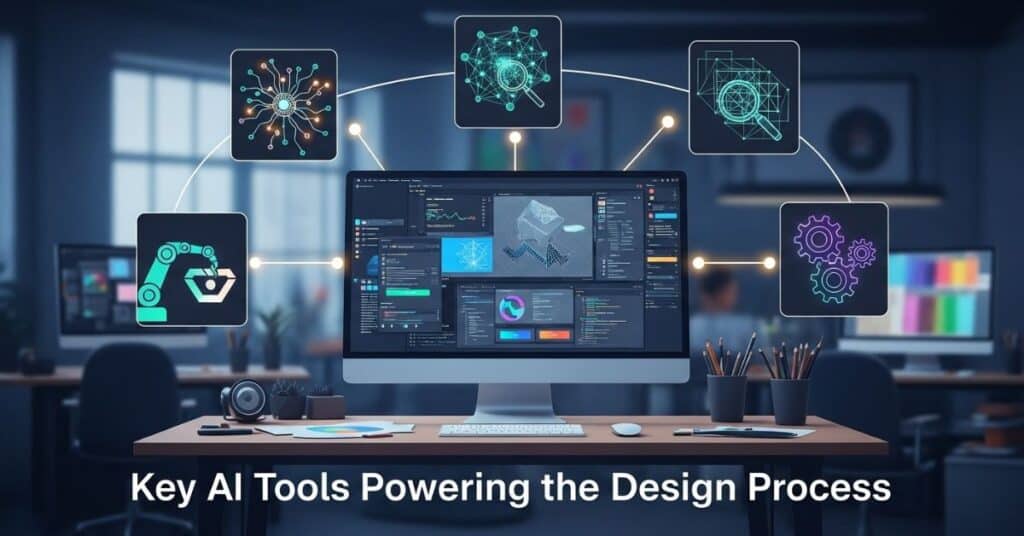
Every designer today has access to a toolkit built around speed and precision. Tools like Figma AI, Uizard, Galileo AI, Midjourney, and ChatGPT for designers are setting benchmarks for innovation. These systems bring AI-based prototyping and smart layout generation into everyday practice, reshaping how professionals work and collaborate.
| Tool | Core Function | Key Advantage | USA Adoption Trend |
| Figma AI | Collaborative ideation | AI design collaboration | Widely used by SaaS startups |
| Uizard | Text-to-design automation | AI-based prototyping | Growing among freelancers |
| Midjourney | Visual generation | AI-generated inspiration | Popular in marketing design |
| Galileo AI | Full interface automation | design ideation automation | Used by product teams |
| ChatGPT for designers | Content & layout guidance | AI brainstorming tools | Used in corporate UX workflows |
These tools simplify complexity, streamline the prototyping process, and promote design team productivity—transforming the traditional workspace into a fluid, AI-augmented ecosystem.
Real-World Example — AI-Tamago and the Future of Automated UI Creation
In Japan and the United States, AI-Tamago has become a leading example of AI-driven product design solutions. Its AI design optimization techniques allow designers to input simple prompts and generate complete interface systems instantly. The model combines visual intelligence with data analytics to create adaptive design systems that evolve over time.
Case studies show companies using AI-Tamago cut design time by up to 60% while improving conversion rates. This demonstrates how manual design vs AI automation isn’t a competition—it’s a collaboration. AI vs human designers is an outdated notion; the real revolution lies in how humans harness AI to amplify imagination, not replace it.
AI-Driven Interface Optimization and Data-Based UX Personalization
AI in UI design goes beyond aesthetics—it’s about understanding human behavior. Through user behavior analysis and behavior-driven design, AI learns how users interact with interfaces, identifying patterns that humans might overlook. These insights lead to AI design challenges and solutions that improve usability and foster inclusivity.
A practical case is found in American e-commerce. By using machine learning in UX, platforms can monitor eye movement, click heatmaps, and interaction pauses to identify usability issues. This data fuels AI-driven personalization, ensuring interfaces dynamically adapt to each shopper’s habits, location, and emotional context. As a result, conversion rates rise while frustration declines.
The Human Element — Why Designers Still Matter
Despite automation, human intuition remains irreplaceable. Emotional intelligence, empathy, and storytelling are traits no algorithm can replicate. AI tools vs traditional methods may offer speed, but the designer’s role is to infuse culture, ethics, and creativity into every visual narrative. As the saying goes, “Technology makes it possible, but humanity makes it meaningful.”
According to Nielsen Norman Group, AI may reduce repetitive design work, but it cannot craft emotional resonance or brand authenticity. Designers who understand AI-powered user experience design use it not as competition but as a creative partner. Together, they form a hybrid ecosystem where art and analytics coexist seamlessly.
Challenges and Limitations of AI in Design
The promise of AI-driven UI/UX development comes with its fair share of obstacles. Ethical questions about authorship, bias in training data, and ownership of AI-generated assets remain unsolved. Many U.S. companies now implement inclusive design practices to ensure their AI remains transparent, fair, and free from discriminatory tendencies.
Technical challenges also exist. Some systems struggle with responsive design improvement or accessibility with AI when cultural nuance and emotional tone are required. Additionally, concerns over privacy and user consent grow as data-driven UI decisions rely heavily on personal information. Balancing innovation with responsibility is the only sustainable path forward.
Emerging Trends — Adaptive, Dynamic, and Self-Evolving Interfaces
The future of UI/UX with AI is already unfolding. Next-generation platforms now deliver adaptive UX systems that morph based on context and emotion. For example, apps adjust color palettes to match lighting conditions or user mood. These dynamic UI interfaces respond like living organisms—fluid, responsive, and intelligent.
Voice-driven navigation, gesture control, and AI-driven personalization are becoming mainstream in the U.S. market. The convergence of generative design systems and AI algorithms in design is giving rise to next-gen design trends that redefine interaction entirely. As brands evolve toward AI-based UI/UX design services, the possibilities for immersive experiences become limitless.
The Road Ahead — Collaboration Between Humans and Machines
The road ahead is paved with collaboration, not replacement. AI in user interface design is a catalyst for creativity, not its enemy. Designers who embrace AI design efficiency achieve faster design iteration, cutting production time without sacrificing artistry. The blend of human insight and algorithmic intelligence marks the dawn of AI-powered UI design mastery.
A powerful visual metaphor defines this new era: Human Creativity + Machine Precision = Limitless Design Evolution. The future belongs to those who can merge intuition with computation, emotion with analysis, and innovation with empathy. Together, humans and machines will continue elevating the UI game to unprecedented levels of sophistication and inclusivity.
Conclusion
The integration of generative AI for designers has turned the static world of design into a living ecosystem of collaboration. Across the USA, every innovation in AI-powered UI design and machine learning in UX redefines creativity itself. The future isn’t about machines replacing humans—it’s about humans teaching machines to create better experiences.
When AI elevates the UI game, it brings artistry, analytics, and accessibility together. From AI brainstorming tools to AI design efficiency, the new digital frontier belongs to those who embrace change. Designers who adapt will not only keep up—they’ll lead the transformation into the next era of AI in UI design excellence.
FAQs
Can AI help with UI design?
Absolutely. AI in UI design helps designers automate layouts, analyze user data, and test multiple interface versions quickly. Tools like Figma AI and Uizard use AI algorithms in design to generate UI elements automatically, improving productivity and overall creativity.
Is AI taking over UI design?
No, it’s enhancing it. While AI design process automation manages repetitive work, humans still control emotion, storytelling, and cultural expression. It’s not AI vs human designers; it’s collaboration that boosts engagement metrics and creates stronger user connections.
What is UI and AI?
UI (User Interface) is what people interact with; AI (Artificial Intelligence) gives it intelligence. Together, they produce AI-powered user experience design—interfaces that think, adapt, and learn from users, improving continuously through data-driven personalization.
Can ChatGPT generate UI design?
Yes. ChatGPT for designers can create layout concepts, text prompts, and AI-generated design examples using OpenAI GPT-4. It acts as a design ideation automation tool that speeds up AI design collaboration and project documentation.
Can ChatGPT give Figma design?
Indirectly, yes. ChatGPT can suggest layouts, content structures, and visual creativity with AI, which designers can then import into Figma AI for full development. This workflow streamlines prototyping process and enhances design consistency.
What are the 4 golden rules of UI?
1. Clarity in communication
2. Consistency in elements
3. Efficiency in interaction
4. User control in navigation
When supported by AI UX optimization and predictive design analytics, these principles produce truly intuitive, adaptive user interfaces.
What is the 80/20 rule in UX design?
It means 80% of user actions come from 20% of the features. With behavior-driven design and AI-driven personalization, systems can identify usability issues, highlight core actions, and optimize user flow around the most impactful elements.

I’ve spent over 8 years working across SEO, WordPress development, Laravel, and UI/UX design, helping businesses improve their websites, search visibility, and overall digital presence. My experience includes on-page and off-page SEO, technical optimization, content strategy, WordPress development, and user-focused design for a range of clients and businesses.
Over the years, I’ve worked with teams including Skyray Ventures, Dotrefl, and ESPA Builders, combining technical development with digital marketing to deliver practical, measurable results.
I’m currently developing Laravel-based web applications at Princess Tourism while also growing LayersPilot, a digital services platform focused on SEO, web design and development, and website customer care.
One project I’m particularly proud of is Catch Head, an AI-powered lead generation platform developed by my team and presented at the Microsoft Imagine Cup at the national level.
I’m especially interested in SEO, Generative AI, prompt engineering, and AI-driven content strategy, and I enjoy connecting with businesses and professionals looking to strengthen their online presence through technology and search.